The Graduate Mentorship Program is a comprehensive 2½-year training in Classical East Asian herbal medicine. We study classical physiology and pathology, diagnosis, herbs and formulas, and the clinical thinking that allows us to bring all of these together in the treatment of real patients. But one of my intentions for the 2027 program is that this medicine not remain something we understand only with our minds.
The movements described in the classical texts are movements of the living body. Opening and closing, ascending and descending, pivoting, gathering, storing, and transforming, and the channels themselves, are not simply concepts we use to understand our patients. They are movements we can experience in our own bodies.
Over my many years of teaching, I have learned that the more a student can experience the truth of these teachings kinesthetically, the easier the material becomes to learn and, even more importantly, to put into practice. When something that initially seems abstract can actually be felt in the body, it begins to make sense in a different way. The teaching becomes less something to remember and more something we can recognize in our patients and in the herbal formulas.
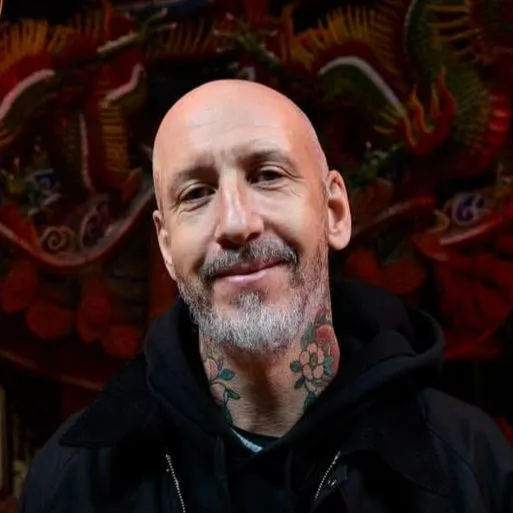 For this reason, I am very happy to share that Ethan Murchie, founder of the Living Neijing Project and the Montreal Gongfu Research Center, will be joining the next Graduate Mentorship Program, which begins in January, 2027, both as a student and as a guest instructor. Each month, Ethan will guide us in the physical culture of the material we are studying, giving us another way to explore and embody the Great Sweeping Motions and the physiological principles that underlie the medicine.
Ethan’s own path into gongfu and Chinese medicine began when he was very young. At fourteen, he suffered a life-threatening spontaneous pneumothorax that left him debilitated. His search for a way back to health led him first to Chinese martial arts and eventually to Vince Black, a physician, martial artist, and Sufi teacher whose work brought Chinese medicine together with xíngyì, bāguà, tàijí, osteopathy, acupuncture, and herbal medicine. Ethan studied under Vince for more than 24 years, and through this training came to understand health, medicine, and physical practice as inseparable.
What particularly excites me about having Ethan join us is the way he approaches the Huángdì Nèijīng. The Nèijīng is foundational to Zhāng Zhòngjǐng’s medicine and to what we are studying in the GMP. Yet it is easy for us, as modern practitioners, to approach it primarily as something to read, interpret, and think about. Ethan approaches it as something to do.
In the interview I’m sharing here, Ethan describes the Nèijīng as a kind of well-worn “how-to manual,” something intended for the hands and the body and made meaningful through repeated practice.I love this way of thinking about it. If these texts describe the movements through which life continually organizes itself, then understanding those movements asks more of us than being able to explain them. We need opportunities to experience them.
As we move through the GMP, Ethan’s monthly sessions will give us a regular opportunity to take what we are studying off the page and into our bodies. My hope is that as these movements become increasingly familiar within ourselves, the classical teachings will become easier to understand, easier to remember, and, most importantly, easier to recognize and apply in the people sitting before us.
Please enjoy my conversation with Ethan. I think it gives a wonderful sense of what he will be bringing to the 2027 Graduate Mentorship Program.
Leave A Comment
You must be logged in to post a comment.