Learning from Case Records

2026-04-05T17:38:28-04:00By |Blog, Classic Formulas, Famous Doctors, Our Courses|

Considering the illness that is related to this formula, I could see Zhang and Lu’s words are authenticated.  Looking back I can see that for the first dose, Da Qing Long Tang was the correct formula.  Yet even though the formula pattern was correct, death was not avoided.  It is not that the herbs in this formula are deadly.  It was the application of them that was deadly.  This was a serious disease that required strong herbs.  But I did not observe the rules for safety vs. danger.  Ma Huang is able to cause a person to sweat but too much sweating plunders the Yang.  I gave 6 qian of Ma Huang combined with Gui Zhi.  How was this going to guard against a big sweat?  Moreover, in regard to the method after taking the herbs, the Shang Han Lun clearly warns that “If there is recovery, sweating once again will damage the Yang.”  I did not tell them that they should not repeat the herbs if there was sweating.  This lead to a situation in which they gave herbs after the sweating and the Yang was damaged leading to death.  This formula should not be taken again with these dosages because it can damage the Yang.  One must give advanced notice about the conditions and safety measures for after taking these herbs.  One should prepare a Si Ni type formula beforehand and give this to the patient, being prepared for any contingency because cold limbs with a pulse on the verge of expiring can be cured.  This failure to carry out the above plan caused a gross error and was due to my own barbaric ignorance.

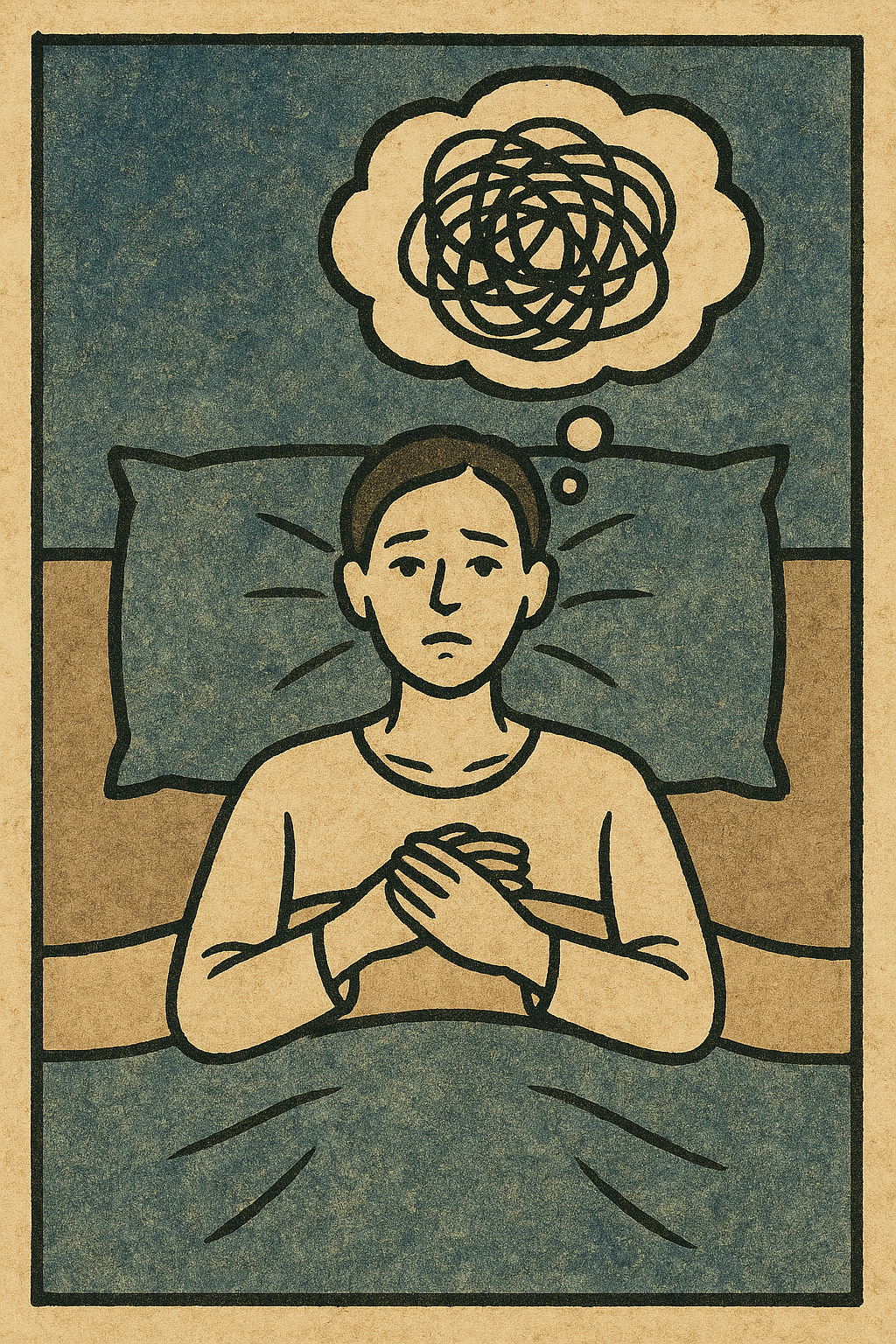
Zhīzǐ Gānjiāng Tāng for Overthinking Insomnia

2025-12-10T12:11:20-05:00By |Blog, Chinese Translation, Classic Formulas, Diagnosis, Individual Herbs, Our Courses|

Zhīzǐ Gānjiāng Tāng for Sleep

Zhīzǐ Gānjiāng Tāng is another teeny-tiny formula,[1] consisting of zhīzǐ, 3 g, and gānjiāng, 6 g. It is mentioned only in clause 80 of the Shānghán lùn, where it states, “In cold damage, the doctor used pills to purge strongly. Body heat remains, and there is slight vexation. Zhīzǐ Gānjiāng Tāng rules.

Let’s break this down a bit, starting with “cold damage.” Cold damage is often considered a term limited to the causative factor of the Máhuáng Tāng pattern. However, when thoroughly reading the Shánghān zábìng lùn, it is clear that Zhāng Zhòngjǐng used it in a much broader way than this. His use of the term cold damage can be summarized as an event that blocks the flow of the life-force yáng in the body. This is in contrast to the term wind-strike, which is also a much broader term than simply the causative factor causing a Guìzhī Tāng pattern. Wind-strike can be summarized as an event that leaves aspects of the body too open and thus prone to leakage. Hence, we have cold damage expressing blockage and wind-strike expressing leakage.

In this case, a blockage, cold damage, was understandably treated with strong purgation. Though we think of purgation […]

Differentiating Several Patterns that can Explain Insomnia

2025-10-27T17:35:31-04:00By |Blog, Classic Formulas, Neijing, Our Courses, Shang Han Lun Physiology|

One of my students, Polina Shneyderman, recently posted her results using Zhīzǐ Chǐ Tāng as follows:

I wanted to share a case that was helped so much by a tiny formula I learned from Sharon in her GMP. I have a patient who is a textbook Guìzhī Tāng pattern and who has done really well on different modifications of Guìzhī Tāng. She has Ehlers-Danlos Syndrome, where her body produces too much collagen, and as a result, she has heart palpitations, agitation, and very loose joints. Guìzhī Tāng has helped with heart palpitations, periods, cold, and body aches. One thing I could not tackle was her waking up before her alarm in the morning, feeling a sense of terror or fear of missing something important.
I learned from Sharon that there is a formula called Zhīzǐ Chǐ Tāng—zhīzǐ and dàndòuchǐ—and that it can help with this kind of terror. I added these two herbs to her formula, and she now sleeps soundly and peacefully until her alarm wakes her up. The bonus—her blood pressure is normal now, too—patients with EDS tend to have dangerously low blood pressure.
Just wanted to share a success story and thank Sharon and other White Pine mentors who help us all be better clinicians.

In the next post, I will discuss this […]

Go to Top