Topics in Chinese Medicine Blog

Reflections on the wisdom, practice, and living tradition of Chinese Medicine

Office Hours: Episode 16 – with Sharon Weizenbaum

2026-01-04T19:49:29-05:00By |Featured Pod, Podcast|

They explore what it really means to embody the practice of Chinese medicine. In this conversation, Sharon Weizenbaum joins Angelique Britt and Toby Dalyto reflect on the practitioner’s journey, the inner work required for ethical and effective care, and the responsibility of teaching living traditions. Together, they examine self-acceptance as a cornerstone of clinical skill, the importance of honoring generational knowledge, and why wisdom in Chinese medicine is meant to circulate—not be owned.

Core Thinking of Huáng Yuányù’s One Qi Flowing in an Unbroken Cycle

2026-01-17T19:34:22-05:00By |Blog, Books, Chinese Translation, Classic Formulas, Huang Yuanyu|

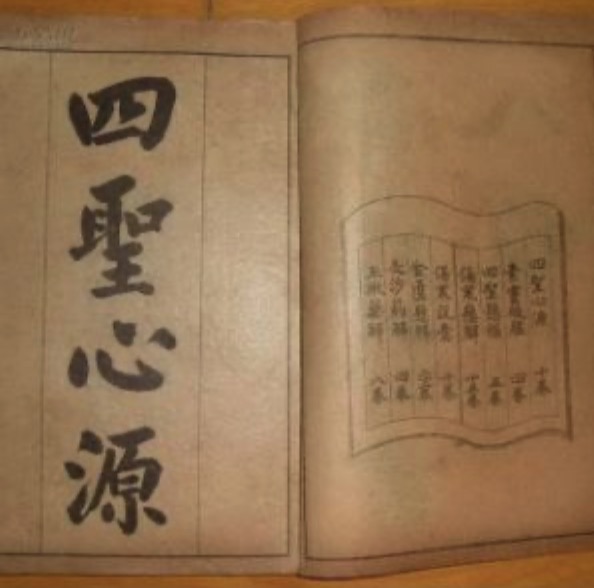
This post introduces a new translation project focused on the Qing-dynasty physician Huáng Yuányù, whose work offers a strikingly coherent vision of physiology rooted in the unity of qi. Rather than proposing a formal doctrine, Huáng consistently explains health and disease through the smooth—or disrupted—circulation of a single qi, governed by ascent and descent around the spleen–stomach axis. The modern phrase “one qi flowing in an unbroken cycle” is a later synthesis of this core insight. Drawing from Huáng’s life, influences, and clinical thinking, the article explores how illness arises when qi cannot rise or descend freely, and how treatment aims not at isolated symptoms but at restoring the continuity of movement itself. Huáng distilled this perspective in his seminal work Sì Shèng Xīn Yuán, demonstrating how simple formulas, precisely applied, can produce profound results. For the translator, Huáng Yuányù’s thinking resonates deeply with a contemporary, systems-based understanding of medicine. This first translated excerpt offers a glimpse into a classical voice that feels unexpectedly current—and sets the stage for further exploration of his work.

Preface for New Enriching Case Record Book

2025-12-22T15:38:46-05:00By |Blog, Books, Chinese Translation, Classic Formulas|

The following is a preface to the recently published book “Medical Cases from the Flower Charm Studio” which was translated by Lorraine Wilcox and edited by Marnae Ergil.  The preface is written by Sharon Weizenbaum. Here is an excerpt from the book to download

The book is currently available for purchase from the Purple Cloud Institute.


The job of a translator is not only to accurately render the original writer’s voice and intention but also to choose, among a plethora of possibilities, the text to translate. The choices are vast, given that a considerable percentage of Chinese medical written records have not been translated into English. In choosing Medical Cases from the Flower Charm Studio by Gù Déhuá, Lorraine Wilcox provides a great service to our community of practitioners.

This text records twenty-nine of Dr. Gù’s complex and often dangerous cases. In many instances, other contemporaneous published case records are quite short, giving only a simple intake, diagnosis, and formula choice with little discussion; frequently, doctors provided no more than the initial and follow-up formulas. In Dr. Gù’s records however, she takes the reader through up to fifteen clinical encounters with a single patient, allowing us to see how the terrain of the case shifts over time in response […]

Zhīzǐ Gānjiāng Tāng for Overthinking Insomnia

2025-12-10T12:11:20-05:00By |Blog, Chinese Translation, Classic Formulas, Diagnosis, Individual Herbs, Our Courses|

Zhīzǐ Gānjiāng Tāng for Sleep

Zhīzǐ Gānjiāng Tāng is another teeny-tiny formula,[1] consisting of zhīzǐ, 3 g, and gānjiāng, 6 g. It is mentioned only in clause 80 of the Shānghán lùn, where it states, “In cold damage, the doctor used pills to purge strongly. Body heat remains, and there is slight vexation. Zhīzǐ Gānjiāng Tāng rules.

Let’s break this down a bit, starting with “cold damage.” Cold damage is often considered a term limited to the causative factor of the Máhuáng Tāng pattern. However, when thoroughly reading the Shánghān zábìng lùn, it is clear that Zhāng Zhòngjǐng used it in a much broader way than this. His use of the term cold damage can be summarized as an event that blocks the flow of the life-force yáng in the body. This is in contrast to the term wind-strike, which is also a much broader term than simply the causative factor causing a Guìzhī Tāng pattern. Wind-strike can be summarized as an event that leaves aspects of the body too open and thus prone to leakage. Hence, we have cold damage expressing blockage and wind-strike expressing leakage.

In this case, a blockage, cold damage, was understandably treated with strong purgation. Though we think of purgation […]

Zhīzǐ Chǐ Tāng for Insomnia with Anguish

2025-12-03T13:56:25-05:00By |Blog, Classic Formulas, Diagnosis|

In the last post, I wrote about two formulas for insomnia, Zhīzǐ Chǐ Tāng and Zhīzǐ Gānjiāng Tāng. Zhīzǐ Chǐ Tāng is an odd, teeny-tiny formula, and the way it works may be difficult to understand, especially the use of dàndòuchǐ, which we probably learned as primarily an herb for resolving the exterior. In this post, I will explain the mechanism of this formula as I understand and use it. How does it treat “anguish in the heart” type insomnia?

Before diving into that, I want to share a recent message from a student who suffered from a rash after a profound loss:

“I kept thinking about how you talked about Zhīzǐ Chǐ Tāng and how it was for anguish in the heart. That word, anguish,  is exactly how I’ve been feeling from the moment of loss.
Anyway, I took some ideas from the formula you originally suggested for me, which already had zhǐshí and zhīzǐ, and added a high dose of dàndòuchǐ, and it was like a lock-and-key magic!  After 3 1/2 months of this rash being so, so stubborn, it started to change dramatically. For the last week and a half, every morning when I wake, the rash is better and better, and I even think something feels a little emotionally lighter as well.
So thank […]

Two Excellent Zhi Zi (栀子Gardenia Fructus) Formulas for Sleep

2025-11-24T10:31:39-05:00By |Blog, Classic Formulas, Individual Herbs|

As a continuation of the discussion on using classical formulas for sleep issues, I will now introduce two very effective zhīzǐformulas: Zhīzǐ Chǐ Tāng and Zhīzǐ Gānjiāng Tāng. As you recall in the previous post, my student Sylvia described the use of Zhīzǐ Chǐ Tāng and how she differentiated the pattern.

First, let’s talk about zhīzǐ. It is the fruit of the gardenia plant. In his poem, Shěn Zhòu[1] of the Ming Dynasty described the gardenia flower like this:

“雪魂冰花凉气清”

Snow ghost, ice flower, with its clear, cold Qi

According to Shen Nong Ben Cao Jing, zhīzǐ‘s flavor is bitter and its nature is cold. It is said to enter the heart, lung, stomach, liver, and San Jiao channels.[2] It is effective in discharging fire and dispelling vexation, clearing heat through benefiting urination, cooling blood, and resolving toxins.

Zhīzǐ‘s key action is to disinhibit the shàoyáng great sweeping motion. The motion of shàoyáng is to pivot. The shàoyáng pivot is responsible for pivoting imperial fire, which has descended into the body through the joint motions of shàoyīn and yángmíng, into its position within the body as ministerial fire. If the shàoyáng pivot motion is inhibited, the descending heat, which is none other […]

Venus Rising Spotlight Interview with Sharon Weizenbaum

2025-10-27T22:14:14-04:00By |Podcast|

In this Venus Spotlight Interview, Sharon Weizenbaum, L.Ac.—renowned herbalist, acupuncturist, and founder of White Pine Institute—shares her journey through decades of study, teaching, and clinical practice in Classical East Asian Medicine. Her Graduate Mentorship Program continues to shape the next generation of practitioners with its focus on diagnostic clarity and classical roots.

Chinese Herbal Medicine for Depression and Anxiety by Sharon Weizenbaum

2025-10-27T22:01:26-04:00By |Videos|

In this in-depth presentation hosted by Kamwo and ASNY, Sharon Weizenbaum shares her clinical experience using classical Chinese herbal medicine to treat depression and anxiety. Drawing from decades of practice and teaching, she discusses the energetic patterns behind emotional suffering—such as Yin–Yang disharmonies, cold blood, and Shao Yang pivot issues—and how classical formulas can restore balance, vitality, and emotional ease.

Go to Top