Core Thinking of Huáng Yuányù’s One Qi Flowing in an Unbroken Cycle

2026-01-05T14:54:46-05:00By |Blog, Books, Chinese Translation, Classic Formulas, Huang Yuanyu|

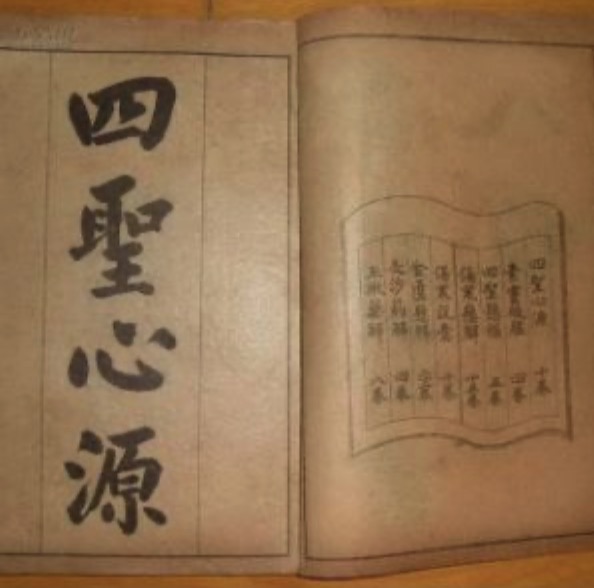
I have begun an exciting project translating Huáng Yuányù’s work. Huáng Yuányù lived from 1704 to 1758 (Qīng dynasty, Qianlong era). To introduce the flavor of his work, I am posting a translation of an excerpt from an article I found about him[1]. The title of the article is 黄元御一气周流核心思维, Core Thinking of Huáng Yuányù’s One Qi Flowing in an Unbroken Cycle.

In truth, Huáng Yuányù does not present a formal doctrine named “One Qì Flowing in an Unbroken Cycle” in his texts. Instead, his work consistently assumes the unity of qi. It explains physiology and pathology in terms of the disruption of the circulation of that single qi, primarily through ascent and descent centered on the spleen–stomach axis. The modern term “One Qì Flowing in an Unbroken Cycle” is a retrospective synthesis of these ideas.

What is exciting to me about Huáng Yuányù’s work and perspective is that it so closely aligns with my own as it has developed throughout my career. I hope it interests you as much as it does me!

黄元御一气周流核心思维

Core Thinking of Huáng Yuányù’s One Qi Flowing in an Unbroken Cycle

清朝乾隆年间,有一个著名的医学大师叫黄元御。30岁那年,不幸罹患眼疾,因被庸生误治,左目失明,身体差点垮掉,因此满怀愤怒,以毕生心血精研《黄帝内经》、《难经》、《伤寒杂病论》等古圣经典,集中华经典医学之大成,开创“天人合一,一气周流”理论。

During the Qiánlóng reign of the Qīng dynasty, there was […]

Preface for New Enriching Case Record Book

2025-12-22T15:38:46-05:00By |Blog, Books, Chinese Translation, Classic Formulas|

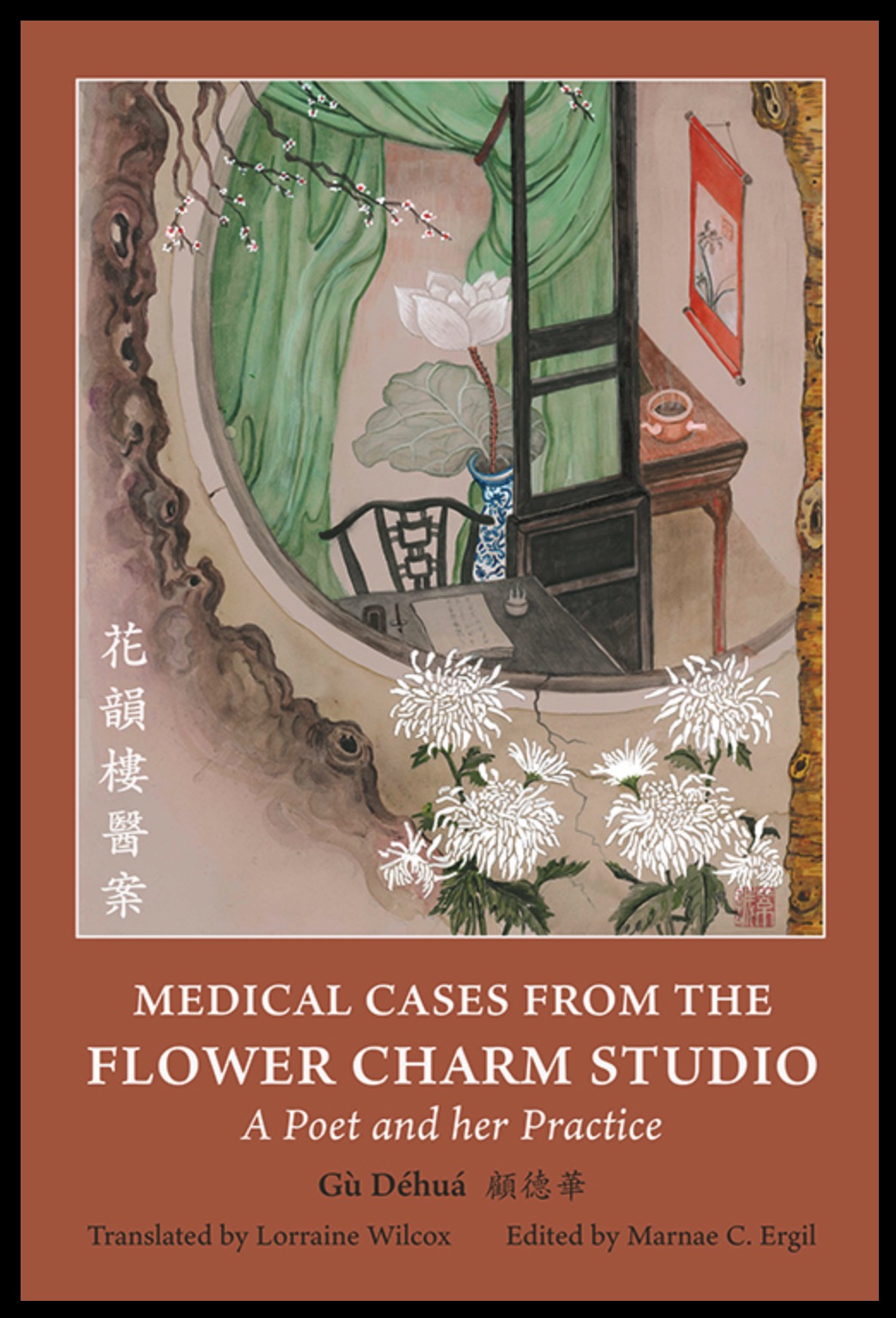
The following is a preface to the recently published book “Medical Cases from the Flower Charm Studio” which was translated by Lorraine Wilcox and edited by Marnae Ergil.  The preface is written by Sharon Weizenbaum. Here is an excerpt from the book to download

The book is currently available for purchase from the Purple Cloud Institute.


The job of a translator is not only to accurately render the original writer’s voice and intention but also to choose, among a plethora of possibilities, the text to translate. The choices are vast, given that a considerable percentage of Chinese medical written records have not been translated into English. In choosing Medical Cases from the Flower Charm Studio by Gù Déhuá, Lorraine Wilcox provides a great service to our community of practitioners.

This text records twenty-nine of Dr. Gù’s complex and often dangerous cases. In many instances, other contemporaneous published case records are quite short, giving only a simple intake, diagnosis, and formula choice with little discussion; frequently, doctors provided no more than the initial and follow-up formulas. In Dr. Gù’s records however, she takes the reader through up to fifteen clinical encounters with a single patient, allowing us to see how the terrain of the case shifts over time in response […]

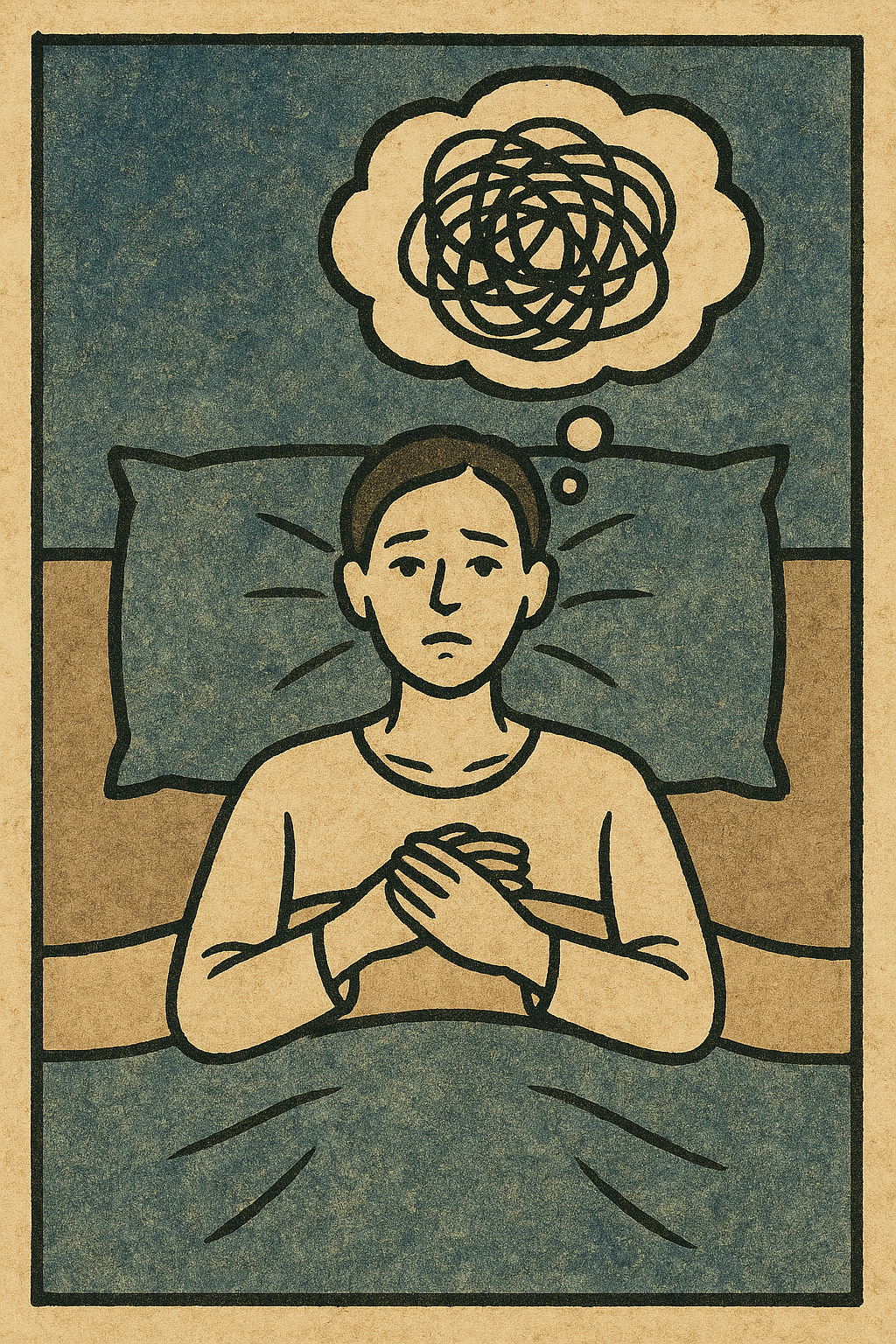
Zhīzǐ Gānjiāng Tāng for Overthinking Insomnia

2025-12-10T12:11:20-05:00By |Blog, Chinese Translation, Classic Formulas, Diagnosis, Individual Herbs, Our Courses|

Zhīzǐ Gānjiāng Tāng for Sleep

Zhīzǐ Gānjiāng Tāng is another teeny-tiny formula,[1] consisting of zhīzǐ, 3 g, and gānjiāng, 6 g. It is mentioned only in clause 80 of the Shānghán lùn, where it states, “In cold damage, the doctor used pills to purge strongly. Body heat remains, and there is slight vexation. Zhīzǐ Gānjiāng Tāng rules.

Let’s break this down a bit, starting with “cold damage.” Cold damage is often considered a term limited to the causative factor of the Máhuáng Tāng pattern. However, when thoroughly reading the Shánghān zábìng lùn, it is clear that Zhāng Zhòngjǐng used it in a much broader way than this. His use of the term cold damage can be summarized as an event that blocks the flow of the life-force yáng in the body. This is in contrast to the term wind-strike, which is also a much broader term than simply the causative factor causing a Guìzhī Tāng pattern. Wind-strike can be summarized as an event that leaves aspects of the body too open and thus prone to leakage. Hence, we have cold damage expressing blockage and wind-strike expressing leakage.

In this case, a blockage, cold damage, was understandably treated with strong purgation. Though we think of purgation […]

Zǐwǎn (紫菀, Aster tataricus) for Constipation

2025-11-24T10:02:08-05:00By |Blog, Chinese Translation, Individual Herbs, Opening Through|

I am currently in a translation workshop, led by Stephen Boyanton, with Lorraine Wilcox and others. The quirky cases Lorraine shares are a constant delight for the participants. Recently, she shared a case in which the doctor spun the patient on a home-made wheel until he vomited to obtain a cure for the patient’s insanity. In another case, the patient had a lump due to grief, and the doctor successfully treated him by teasing him until he laughed so hard he could barely stand it. These cases are wonderful and will hopefully find their way into a book for all to enjoy and learn from.

Today, Lorraine posted this case in our new White Pine Circle Translation Support Group. It is from Volume 2 of 俞弁《續醫說》 Xù Yī Shuō by Yú Biàn (1522, Míng):

宋蔡元長苦大便秘,國醫用藥,俱不能通利,蓋元長不肯服大黃故也。時史載之未知名,往謁之閽者,齟齬久之,乃得見既而診脈,史欲出奇曰:請求二十文錢。元長問何為,曰:欲市紫菀耳。

(Northern Sòng dynasty prime minister) Cài Yuánzhǎng suffered constipation. The Imperial Doctors used herbs, but nothing could free his stool. It was probably because Cài Yuánzhǎng was not willing to take dàhuáng. At the time, Shǐ Zàizhī was not a well-known doctor. He called on Cài, but the gatekeeper argued with him for a long time. Eventually, Shǐ got to see Cài and took his pulse. Shǐ was about to leave and strangely asked for 20 coins. […]

Go to Top