
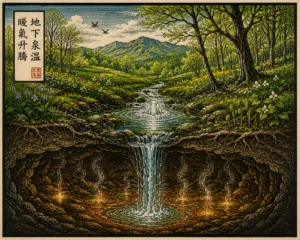
 This spring, as the frost finally loosens its hold on the New England ground, I have found myself moved by the words of Huáng Yuányù that I have been translating. There is something about his medicine that only reveals itself while watching the seasonal cycles of nature. It is spring now and the maples have been pulling sap upward long before leaves appear. Mud softens beneath the feet. Streams swell with snowmelt. Heat rises visibly from compost and wet soil in the early morning light. The whole landscape feels less like a collection of objects than a single circulation slowly awakening from winter storage.
Few physicians have ever written this movement more beautifully than Huáng Yuányù.
In a passage I have been recently translating from his Heart Source of the Four Sages, he writes:
血藏於肝而總統於衝任,陰中陽盛,生意沛然,一承雨露,煦濡長養,是以成孕而懷子。譬之於土,陽氣冬藏,水泉溫暖,春木發揚,凍解冰消,暖氣升騰,故萬物生焉。使冬無地下之暖,雖有陽和司令,亦成寒谷不生矣。
Blood is stored in the liver and its circulation is integrated through the chōng and rèn;
within yīn, yáng flourishes, and thus the impulse of life pours forth luxuriantly.
Once rain and dew are received and carried forward, there is an incubating warmth and gentle soaking to foster growth and nourishment;
thus pregnancy forms and a child is conceived.
Using soil as an analogy:
yáng qì stores itself in winter;
underground springs remain warm;
in spring, wood effuses upward;
frozen ground loosens and ice melts away;
warming qì ascends and billows upward;
thus all things come to life.If winter lacked subterranean warmth,
then even with harmonizing yáng presiding over the season,
it would still become a cold valley barren of life.
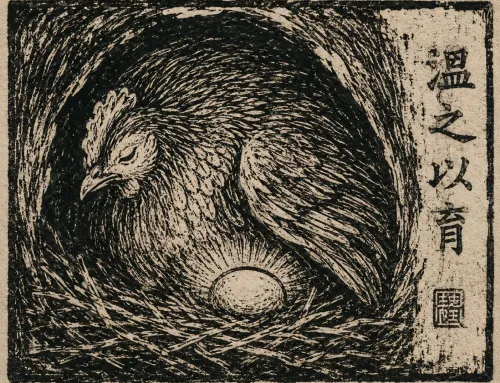
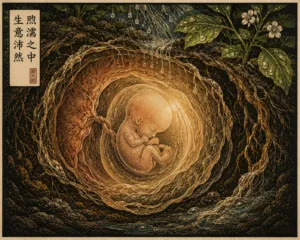 What strikes me most about this passage is its extraordinary philological precision: The phrase I translated as “incubating warmth and gentle soaking” is 煦濡 (xùrú). Neither character refers merely to abstract warmth or moisture. 煦 describes the kind of warmth that quietly fosters life from within: fire that lives within soil, warmth beneath feathers or fur, the sheltered incubation under which embryos develop and seeds germinate. It is not blazing heat but nurturing warmth held close. 濡 means more than simple wetness. It evokes permeating moisture, soaking saturation, the gradual penetration of deep springs into earth and root. Together the phrase describes the exact conditions under which life unfolds: warmth that incubates and moisture that thoroughly permeates.
The entire passage pivots on one image:
“Underground springs remain warm.”
This is the secret of spring.
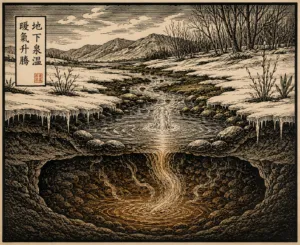 The earth appears frozen and lifeless above, yet deep beneath the surface warmth is preserved. Aquifers continue moving underground throughout the winter. Springs do not freeze solid at their source. Hidden warmth remains stored below the frost line. Because this subterranean yáng survives, spring becomes possible. Ice melts. Sap rises. Seeds swell. Wood “effuses upward.” Life returns.
Without this hidden warmth, Huáng says, even if spring sunlight arrives externally, nothing can grow:
“Even with harmonizing yáng presiding over the season, it would still become a cold valley barren of life.”
This is one of the most profound medical observations I know.
Life does not emerge merely because warmth appears from outside. It emerges because living warmth has been preserved internally through winter concealment.
Huáng applies this directly to fertility and blood physiology. Blood is not inert substance in his system. It is living circulation animated from within by hidden yáng. The chōng and rèn vessels do not simply transport reproductive material mechanically; they integrate the circulation of life itself. Pregnancy forms under the same conditions by which spring forms: incubating warmth, gentle soaking, preserved subterranean vitality, gradual upward effusion.
The language is beautifully agricultural. Rain and dew are “received and carried forward.” Warmth incubates. Moisture soaks. Growth is fostered and nourished. The body behaves like cultivated earth.
Living on a farm has changed the way I read passages like this. In modern urban life, seasons are often reduced to scenery. But farming restores awareness that life depends upon delicate hidden continuities. A late frost can destroy blossoms overnight. Saturated cold soil prevents germination even under bright spring sunlight. Seeds require not only heat but warmth held properly within the ground. Every day the landscape reenacts the physiology Huáng describes.
This week the fields around my house have begun visibly changing. The pastures are turning green almost faster than the eye can follow. The moon hangs above the wet fields at dusk while peepers call from the flooded edges of the woods. During the day, sunlight warms the dark earth and steam rises after rain exactly like Huáng’s “warming qì ascending and billowing upward.” Everywhere one looks there is stored life unfolding itself outward.
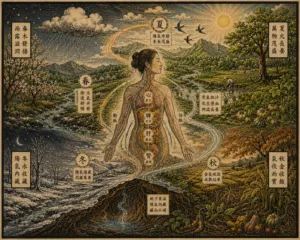 What makes Huáng so remarkable is that he recognized the body as participating in these same cosmological movements. His medicine is not separate from weather, agriculture, seasonality, or celestial rhythm. The same principles governing thawing earth govern blood circulation, fertility, vitality, and illness. Warmth must descend and remain hidden. Moisture must permeate gently. Wood must unfurl upward without obstruction. Life depends upon successful circulation through cycles of concealment and emergence.
Reading him during spring feels less like studying an old medical text than like watching the world explain itself.

Leave A Comment
You must be logged in to post a comment.