
 I have begun an exciting project translating Huáng Yuányù’s work. Huáng Yuányù lived from 1704 to 1758 (Qīng dynasty, Qianlong era). To introduce the flavor of his work, I am posting a translation of an excerpt from an article I found about him[1]. The title of the article is 黄元御一气周流核心思维, Core Thinking of Huáng Yuányù’s One Qi Flowing in an Unbroken Cycle.
In truth, Huáng Yuányù does not present a formal doctrine named “One Qì Flowing in an Unbroken Cycle” in his texts. Instead, his work consistently assumes the unity of qi. It explains physiology and pathology in terms of the disruption of the circulation of that single qi, primarily through ascent and descent centered on the spleen–stomach axis. The modern term “One Qì Flowing in an Unbroken Cycle” is a retrospective synthesis of these ideas.
What is exciting to me about Huáng Yuányù’s work and perspective is that it so closely aligns with my own as it has developed throughout my career. I hope it interests you as much as it does me!
黄元御一气周流核心思维
Core Thinking of Huáng Yuányù’s One Qi Flowing in an Unbroken Cycle
清朝乾隆年间,有一个著名的医学大师叫黄元御。30岁那年,不幸罹患眼疾,因被庸生误治,左目失明,身体差点垮掉,因此满怀愤怒,以毕生心血精研《黄帝内经》、《难经》、《伤寒杂病论》等古圣经典,集中华经典医学之大成,开创“天人合一,一气周流”理论。
During the Qiánlóng reign of the Qīng dynasty, there was a renowned medical master named Huáng Yuányù. At age thirty, he unfortunately developed an eye disease; after being wrongly treated by an incompetent practitioner, he went blind in his left eye, and his health nearly collapsed. Filled with indignation, he devoted his life’s effort to intensive study of the classical canons—Huángdì Nèijīng, Nánjīng, Shānghán Zábìng Lùn, and others—synthesizing the achievements of China’s classical medicine and establishing the theory of:
“Heaven and humans form an integrated whole, as one qi flowing in an unbroken cycle.”
“一气周流”认为,人体内有一股无形的气在不停的周流运转着。先天之气—元气带动脾胃之气旋转。脾气和胃气通过升降斡旋,带动肝、心、肺、肾之气左升右降,形成一个完整的如环无端的“一气周流”循环。
The doctrine known as ‘one qi flowing in an unbroken cycle’ holds that an intangible qi flows in a continuous cycle within the human body.
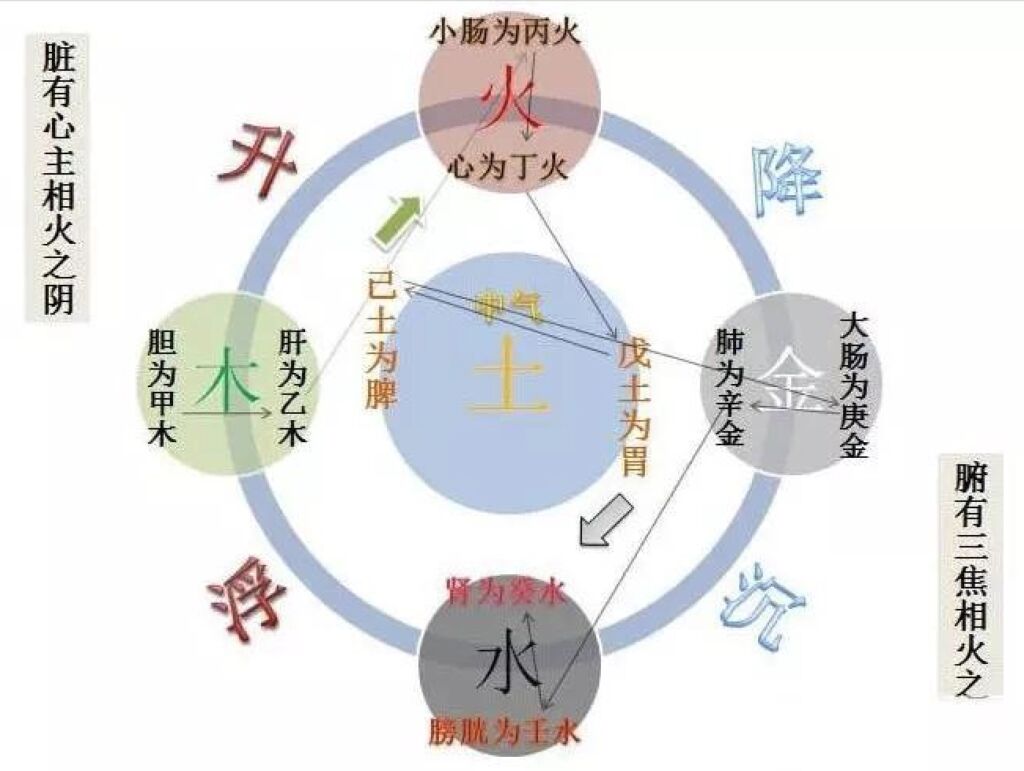
The pre-heaven qì—yuánqì—drives the qi of the spleen and stomach to rotate. Through the spinning mediation of rising and descending of spleen qi and stomach qì, the qi of the liver, heart, lung, and kidney is propelled to rise on the left and descend on the right, forming a complete, ring-like circulation without beginning or end
人体周流的这一气,升不上去会生病,降不下来也会生病。人体各个器官发生疾病,其实都是人体这团气郁结于该处,致使一气周流运转不畅而产生的。所以,中华医学讲究治病治本,就是保住元气,使一气周流在身体各器官畅通,解决人体各个器官的健康问题。
If the one qì flowing in an unbroken cycle of the human body cannot ascend upward, illness arises; if it cannot descend downward, illness also arises. When illness appears in any organ, it is essentially because this concentrated congestion of qi becomes constrained and bound there, obstructing the free flow of the one qì’s unbroken cycle. Therefore, Chinese medicine emphasizes treating the disease root: preserving yuánqì so that the one qì can flow smoothly in an unbroken cycle through all organs of the body, thereby resolving each organ’s health issues.
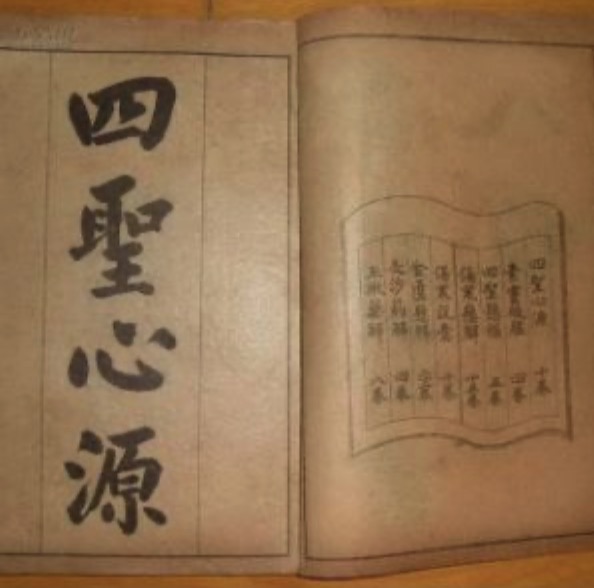
黄元御把他这一套“一气周流、升降回环、如环无端”的理论,系统的总结,著书于世,就是我们今天看到的《四圣心源》。中医理论古今如一,并无二致。而自从张仲景既有,却只有黄元御一个人悟透了这个道理。利用“一气周流”理论指导中医临床,用很普通的药物,作很简单的组合,来调节人体之气得升降,就可以达到举重若轻,覆杯而愈的效果。
Huáng Yuányù systematically summarized this set of ideas – “one qì flowing in an unbroken cycle, rising and descending in cyclical loops, endless like a ring,” and set them forth in his book 四圣心源, Heart Source of the Four Sages, which is what we read today. Traditional Chinese medical theory is essentially the same across ancient and modern times. Yet since the time of Zhāng Zhòngjǐng, it was Huáng Yuányù alone who is said to have fully penetrated this principle. Using one qì flowing in an unbroken cycle to guide clinical practice—employing ordinary medicinals in simple combinations to regulate the body’s rising and descending of qì—one can achieve great effect with apparent ease: the illness resolves as swiftly as a cup is overturned.
[1] Author unknown. 黄元御一气周流核心思维. https://www.jingfangpai.cn/p/10058948 (12/5/26).
No original printed source or classic book is identifiable from the text itself.

Leave A Comment
You must be logged in to post a comment.